The Glance Before the Reply
Learn how to read a glance before the reply by tracing its timing, eyeline, and effect on the exchange, without treating one gesture as a fixed code.
Viewers often rush past the glance before a reply because the dialogue seems to supply the important information. That shortcut misses the moment an answer takes shape: a shift of attention can alter the exchange before the character speaks.
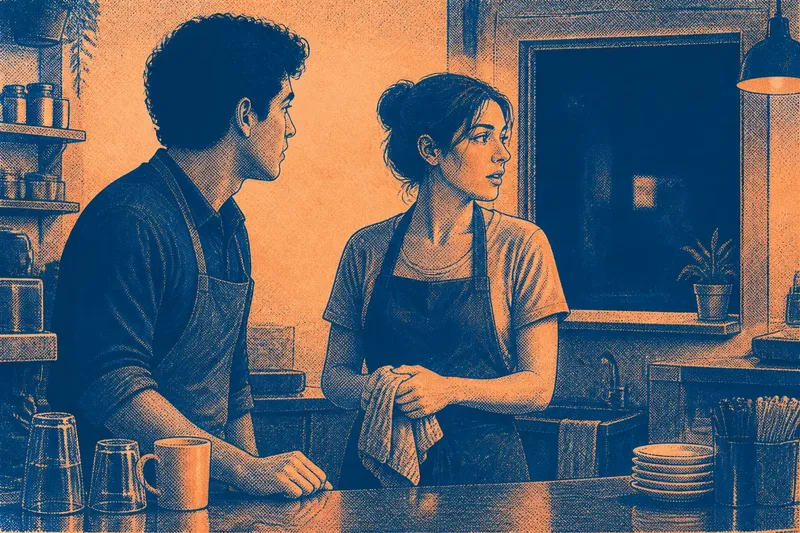
Imagine a scene in which Mara and Luis are closing their neighborhood café. Luis asks whether she has accepted a job in another city. Mara starts, “I think…” and looks toward the dark service window. After a pause, she turns back and says, “I’m going to stay.” The words announce a decision; the interval gives the viewer a chance to notice its arrival.
The unfinished sentence changes what the glance can mean
A glance has no dependable translation on its own. Its meaning depends partly on what the character was doing just before it. Mara has begun an answer but has not completed it, so her turn toward the window interrupts a thought in progress. If she had already said, “I’m staying,” and then looked away, the movement would occur after the decision was stated and might carry a different emphasis.
That difference is useful because performance unfolds in time. Watch the order of the actions: Mara begins speaking, breaks off, redirects her eyes, pauses, and returns to Luis. Rather than naming the glance as fear or regret, ask what changes between the unfinished phrase and the reply.
Keep the interpretation close to what the scene makes visible.
The eyeline offers a direction, not a diagnosis
Where a performer looks can help orient the viewer, but it does not explain the motive automatically. The service window might hold an object that catches Mara’s attention; it might also give her a place to look while she considers an answer. Check whether the film has already established movement, sound, or another point of interest in that direction.
If the window remains dark and nothing draws attention to it, the act of looking away may matter more than anything beyond the frame. Even then, several readings remain possible. Mara could be searching for words, avoiding Luis’s eyes, or taking a moment to choose. Her breath, the return of her gaze, and the next line can help distinguish among these possibilities without turning one gesture into a code.
Listen to the other performer as well as watching the one who looks away. Luis’s stillness, a change in posture, or a reply that begins and then stops may show that he has registered the pause. If his behavior does not change, the interval may read as more private to Mara.
How can you read a glance without fixing its meaning?
What does looking away tell you?
It shows a change in the performer’s visible attention, not its cause. Compare the eyeline with the conversation, the frame, and any response from the other character before deciding what the movement suggests.
Does a pause mean the character is hiding something?
No single pause settles that question. It may hold uncertainty, restraint, recognition, or a search for words; the surrounding actions and the reply help clarify which readings fit.
How does the shot affect what you can notice?
A close shot can make a small eye movement or change in the mouth easy to see. A wider shot may show the glance’s relation to another person or an object, while leaving subtle facial activity less legible.
What if the dialogue already explains the decision?
The performance can show when the character reaches that decision or how it feels to voice it. Notice whether the change appears before the line, during it, or only after the words are spoken.
Framing and editing shape the pause
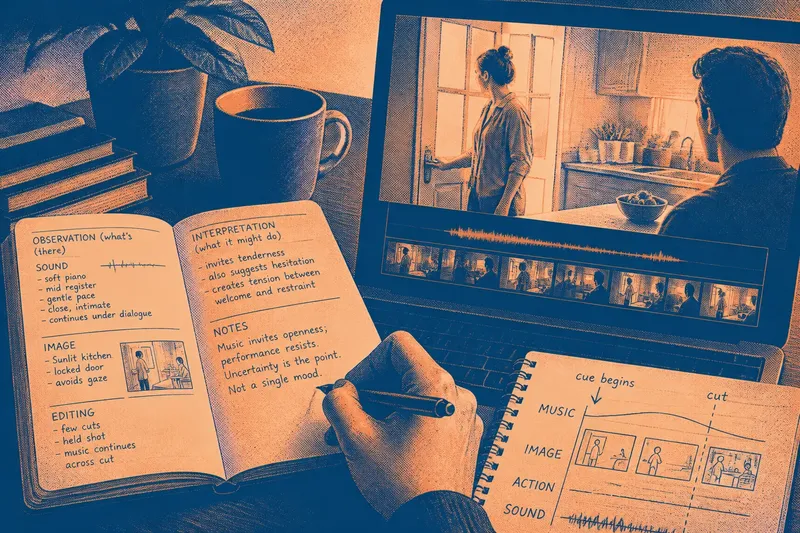
The performer’s face is only one part of what reaches the screen. Camera distance determines which movements are visible; editing decides whether the viewer stays with Mara or sees Luis waiting. Room tone, a refrigerator hum, or a sudden quiet can also make the interval feel exposed without telling us exactly what Mara thinks.
Separate those contributions as you watch. First notice what Mara does within the shot: perhaps her focus shifts, her breath catches, or her jaw relaxes. Then notice the cut and sound. A cut to Luis can make the silence feel shared, while a continuous shot on Mara can keep attention on her effort to answer.
In the invented café scene, imagine the editor cuts from Mara’s glance to Luis before she speaks. Luis’s waiting becomes part of the pause, and the exchange may feel more mutual. If the shot stays on Mara through her reply instead, her return of eye contact may carry more weight. The observable difference is where the scene places the viewer’s attention, not proof of a single motive.
Use the reply to revise your first impression
After noticing the glance, return to the words that follow. Does “I’m going to stay” sound firm, tentative, or meant to reassure Luis? Does Mara meet his eyes, speak without looking back, or leave a space between the words? These details can support or complicate an initial reading.
For Mara, the sequence supports a restrained interpretation: she begins an answer, pauses while looking away, then returns with a choice. Luis’s quiet attention gives her room to speak, and the line makes the decision explicit. The look need not be a revelation; it can mark the small interval in which the answer becomes sayable.
To read a glance before the reply, keep the search phrase practical: note the preceding line, the direction of the eyes, the other performer’s response, the cut, and the first words afterward. This sequence makes it easier to tell what the film shows from what you are inferring.