Before Film Could Speak: The Art of the Intertitle
Intertitles in silent film did more than supply dialogue: see how their placement, wording, and design shape a scene’s pace and meaning.
The most common mistake in reading intertitles in silent film is treating every card as dialogue with the sound removed. That assumption can flatten a scene: a card may orient the audience, reveal a written message, or interrupt the action in a way that changes its rhythm.
A useful way to approach an intertitle is to follow its place in the sequence. What appears just before it? What does the next image do with its words? A card’s meaning often emerges from that exchange rather than from its text alone.
An intertitle is part of the image sequence
An intertitle is a printed card inserted between shots, usually bearing words for the audience to read. It gives written language a place within moving-image storytelling, without requiring a character to speak aloud on screen.
Some cards are plain text on a dark background. Others use decorative borders, illustrations, or distinctive lettering. Even a simple card is an image: its spacing, design, and duration shape how the viewer encounters its words.
The terms “intertitle” and “title card” can overlap, but close analysis benefits from distinguishing cards embedded in the action from opening titles or cast lists. The former interrupt or redirect a scene; the latter usually identify the film or its participants.
A card can orient, quote, or comment
Intertitles served different purposes. A card might identify a character, establish a place, mark a passage of time, or clarify a situation. Another might present dialogue, reproduce a letter, or offer a narrator’s observation.
These functions can overlap. A letter card may explain a plot point while also making the message feel private. A comic remark may both shape the audience’s response and introduce a speaker’s voice. Rather than assigning a card one permanent label, ask what work it does in that moment.
- Orientation: If a card names a person, place, or time, then use it to locate the action; if the image already supplies that information, consider whether the wording also creates a tone or emphasis.
- Dialogue: If a card presents a character’s words, then compare them with the character’s gesture and the other person’s response; if those signals clash, read the gap as part of the performance.
- Written message: If the card reproduces a note, letter, or sign, then check who handles or sees it; if other characters cannot read it, the film may be giving the audience knowledge they lack.
- Commentary: If a card sounds like a maxim, joke, or narrator’s remark, then compare its tone with the following image; if the image resists the wording, keep both meanings in view.
- Transition: If a card announces a new phase or a jump in time, then look for a changed setting or situation afterward; if the action continues without a clear shift, the card may be emphasizing a change in mood instead.
- Emphasis: If a card appears before a revealing object or expression, then notice what expectation it creates; if it follows that image, consider whether it confirms or revises what you have already seen.
Placement turns reading time into scene rhythm
An intertitle asks the audience to stop watching moving action and read. The pause can feel brisk, solemn, comic, or suspenseful, depending on the words, the time allowed for reading, and the cut that follows.
A short line between two quick gestures may sharpen a joke. A longer passage can slow a sequence and give the audience time to absorb an explanation. A card placed after a character’s expression may feel like a disclosure; placed before it, the same words can shape how that expression is understood.
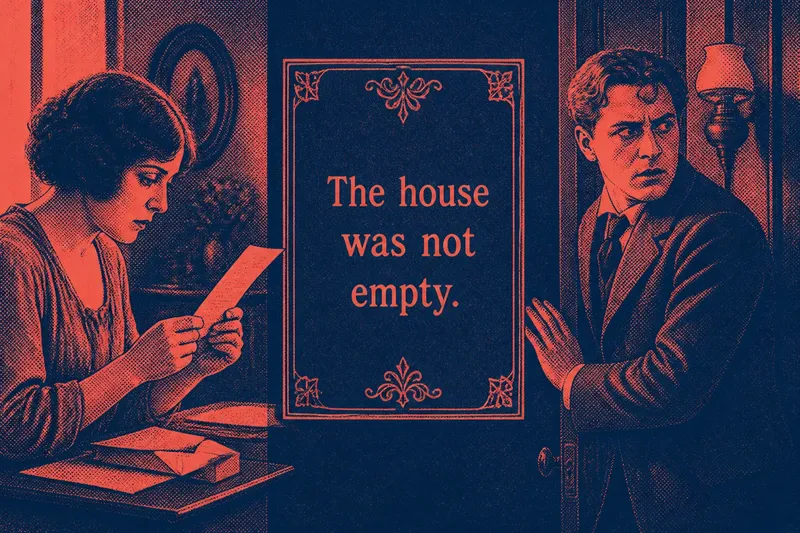
Imagine a character reaching toward a closed door. A card appears: “The house was not empty.” The next shot shows the character pausing with a hand near the latch. The words have created anticipation, and the pause now carries a particular uncertainty.
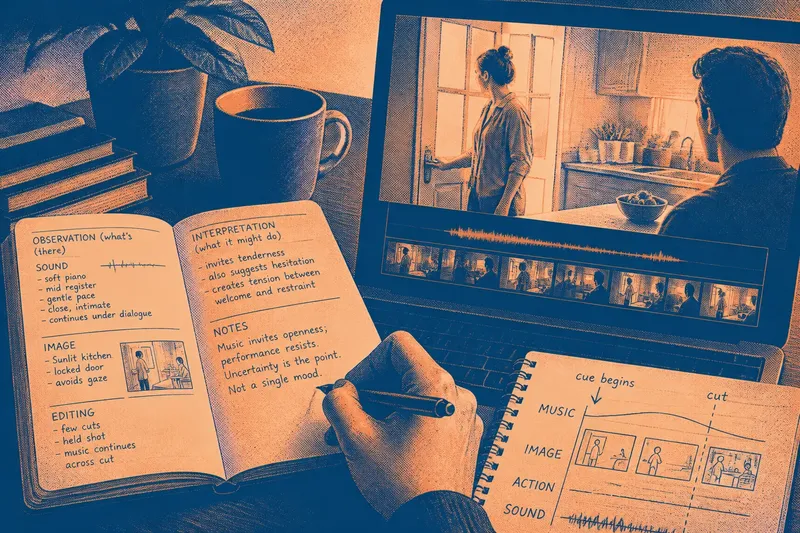
Track the action across the cut into the card and the cut back out. That is where the change in pace becomes visible.
Performance can complicate the printed words
A dialogue card does not settle what a character feels. The words may sound confident, while posture or expression suggests doubt. That tension lets the audience compare what is said with what the body communicates.
Cards also work with objects and composition. A film might show a letter, then make its contents readable in a card, then return to the person holding it. The sequence can distinguish what the character knows from what the audience knows, or reveal who is excluded from the information.
When a card and a performance seem to disagree, resist choosing one as the “real” meaning too quickly. The disagreement may be the scene’s point.
Design and surviving versions affect how cards read
Wording and design vary with a card’s purpose. A compact line can preserve pace; a fuller explanation can orient viewers through a complicated situation. Formal language may suggest an official notice, while conversational phrasing may sound like a private message or comic aside.
Typography and ornament can support that distinction, but design alone does not identify who is speaking. Look for evidence in the surrounding shots and in the way the card is framed by the action.
Viewers may also encounter different versions of a film. A reissue, restoration, or translation can change the cards available in a particular presentation. If wording seems unusual, treat the version on screen as the evidence you have, rather than assuming every copy used identical text.
What should you look for in an intertitle?
Is the card dialogue or explanation?
Check whether a character’s gesture or the surrounding reactions frame the words as speech. If the card instead names a time or place without an apparent speaker, it is likely orienting the audience.
Who can read the words?
Compare the card with who handles the letter, sign, or note. If the audience sees words that a character has not yet read, the sequence may create dramatic irony; if the character reads them too, the card may simply share information.
What does the next image add?
See whether the following shot confirms, complicates, or contradicts the card. A look, movement, or object can revise the words instead of merely illustrating them.
Would the scene remain clear without it?
If removing the card would make an action hard to follow, it is carrying exposition. If the action remains clear but loses a joke, mood, or contrast, the card is doing expressive work.
A worked reading follows the card through the scene
Say you are watching a scene in which a character studies a torn note. The visible starting point is a fragment of paper in the character’s hand; the film then inserts the line, “Meet me after the bell.” In the next shot, the character looks toward a clock and folds the note away.
First, the card supplies words the torn paper alone does not make legible. Next, the look toward the clock connects the message to a particular deadline, while folding the note away suggests the character is keeping it private. The result is a scene in which the audience knows the invitation, but the character’s response remains more important than the sentence itself.
That reading would change if another character were shown watching the note being folded away: the action could then emphasize concealment from someone nearby. The sequence, not the card by itself, determines which interpretation fits.
Intertitles in silent film could clarify, withhold, quote, or alter the beat of a scene. For a close reading, follow the card into the next image and watch how gesture, framing, and timing answer its words. The most revealing moment may be the cut after the text disappears.